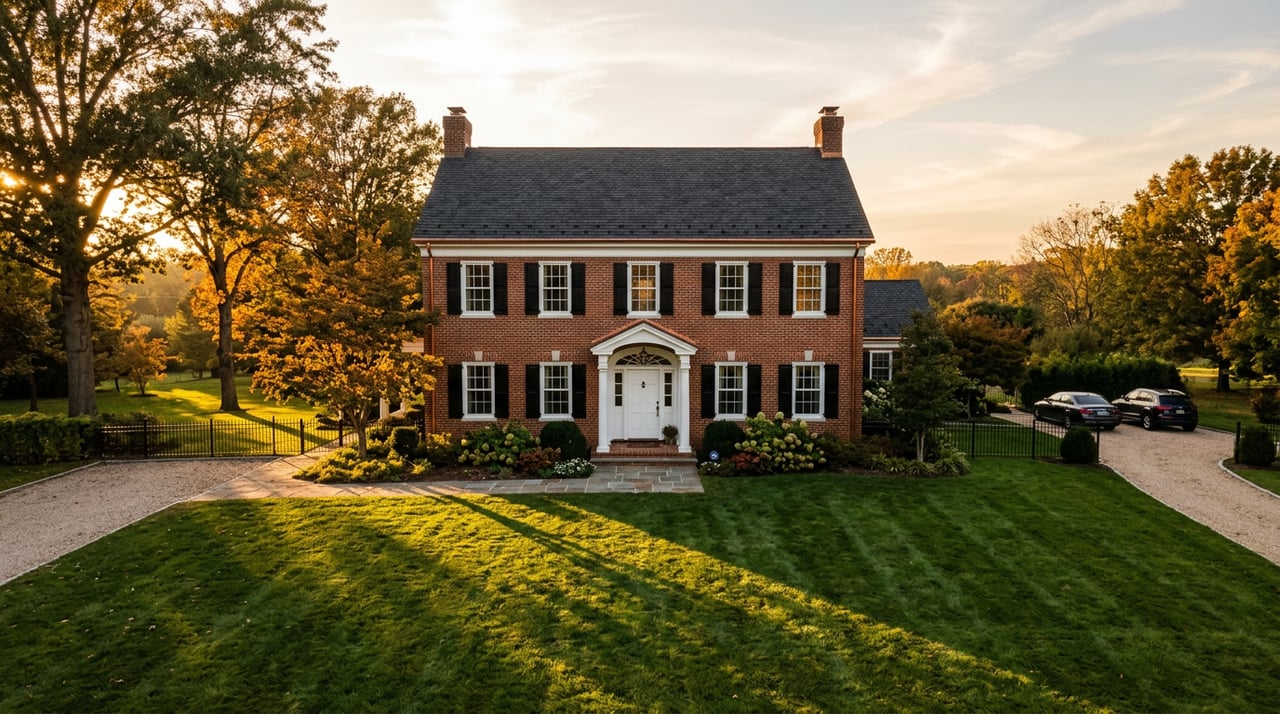
The inspector spends three hours in a Setauket colonial on a Tuesday morning. He tests every outlet, checks the attic insulation, runs the furnace through a cycle, photographs a hairline crack in the foundation, and hands over a forty-page report with a flashlight-lit photo of the electrical panel. Somewhere under the back lawn sits a cesspool that has been quietly handling this house's wastewater since the Eisenhower administration. It does not appear anywhere in that report, because a standard home inspection in New York does not include one.
That gap exists everywhere on Long Island. It matters more in Setauket than almost anywhere else, for two reasons that usually get discussed separately but actually work together. A large share of the housing stock here predates 1973, which means older, single-chamber cesspool designs that fill faster and often come with no paperwork at all. And the neighborhood sits inside the Stony Brook Harbor watershed, with Conscience Bay close enough that what leaves a Setauket yard eventually shows up in that water. The same two facts that make an older Setauket house a slightly bigger unknown at inspection time are also, as it turns out, the reason its owner might qualify for real money to fix it. Knowing which side of that equation you're on, before you're in contract, is the actual work here.
The Cutoff Year Nobody Puts in the Listing
Nobody writes "pre-1973 cesspool" in a real estate listing, but the year matters more than square footage in this specific conversation. Homes built before that point in the Three Village area typically used single-chamber cesspool designs rather than a tank-and-leaching-field system. A single chamber does less separating of solids before effluent moves into the ground, so it fills faster and needs more frequent attention than what a buyer might picture when they hear the word "septic."
If the house predates the paperwork, the county often doesn't know what's down there either. Older systems on North Country Road and throughout the historic village area were installed long before anyone was filing registration notices with the Suffolk County Department of Health Services, and it is not unusual for a current owner to have no record of when the system was last serviced, or exactly where it sits on the lot.
Why the General Inspection Skips It
A standard home inspector does a visual walkthrough. He is not pumping the tank, measuring sludge and scum levels, or running a camera through the distribution lines, because that is a different trade with a different scope of work. A dedicated septic or cesspool inspection typically runs three hundred to five hundred dollars and involves someone actually opening the system and looking at its condition, not just confirming it exists.
That cost is small next to what it protects against. A full drain field replacement on Long Island can run fifteen to twenty five thousand dollars or more. Spending a few hundred dollars before closing to find out whether you're buying a system with years of life left, or one that's a heavy rainstorm away from a problem, is one of the cheaper forms of due diligence available in a Long Island transaction. Lenders sometimes push this decision along faster than county rule does: FHA and VA loan products carry their own septic requirements, and a buyer using one of those products may find the cesspool conversation becomes unavoidable regardless of what Suffolk County technically mandates for that particular sale.
The 2019 Rule That Changed What Failure Actually Costs
Here is the mechanism that changes the math for an older Setauket house specifically. Effective July 1, 2019, Suffolk County stopped allowing a failed cesspool to be replaced with another cesspool. That loophole, which let homeowners swap a dying single-chamber system for an identical one, closed for good. Anyone replacing a failed system now has to install, at minimum, a conventional septic system with a tank and leaching structure. For new construction and major reconstruction projects, the bar goes higher still: many now require an Innovative/Alternative Onsite Wastewater Treatment System, the nitrogen-reducing technology known as I/A OWTS, under Article 6 of the Suffolk County Sanitary Code.
What that means in practice: the 1962 single-chamber system quietly doing its job under a Setauket lawn today is fine, right up until it isn't. The day it fails, the owner is not looking at a like-for-like swap. They're looking at a system upgrade that costs meaningfully more than what a straight cesspool replacement would have cost a decade ago.
| Situation | What's required | Typical cost |
|---|---|---|
| Routine pumping and maintenance | No permit needed, just service | $200 to $500 |
| Replacing a failed cesspool | Minimum: conventional septic tank and leaching structure | $15,000 to $25,000+ |
| New construction or major reconstruction | Often requires nitrogen-reducing I/A OWTS under Article 6 | Higher upfront, partially offset by grants below |
Why Being Near Conscience Bay Cuts Both Ways
This is where the story turns. Suffolk County's Septic Improvement Program does not treat every applicant the same. Applications get scored and ranked, and preferential consideration goes to properties in what the county calls environmentally sensitive areas, mapped against the Suffolk County Subwatersheds Wastewater Plan. A hamlet sitting inside the Stony Brook Harbor watershed, with Conscience Bay a short walk from the property line, is exactly the kind of location that program was built to prioritize.
The funding behind that priority status got considerably larger a little over a year ago. In July 2025, Governor Hochul signed an amendment increasing the state's reimbursement rate for an I/A OWTS installation to seventy five percent of cost, capped at twenty five thousand dollars, on top of Suffolk County's own Septic Improvement Program, which offers a base grant of up to ten thousand dollars with additional incentives that can bring the county side up to twenty thousand dollars for qualifying installations. Combined, eligible homeowners can access as much as forty five thousand dollars toward a nitrogen-reducing system upgrade. Suffolk County Executive Ed Romaine said the increased funding could let homeowners upgrade "for virtually next to nothing." For a Setauket property that already sits in a priority watershed, that combination of grant eligibility and geographic priority is not a coincidence. It's the same proximity to the water that makes an aging system a bigger environmental concern in the first place.
What This Means If You're Buying an Older Setauket Home
Ask for the system's age and type before you're deep into attorney review, not after. Request any pumping or service records the seller has, and don't assume a clean general inspection means the septic system was part of what got checked. If the property is genuinely older, or if nobody can produce documentation, budget for a dedicated inspection as part of your due diligence period rather than treating it as optional. It's a few hundred dollars against a five-figure surprise.
It's also worth checking whether the address falls inside one of the county's mapped priority areas for the Septic Improvement Program. If it does, and a prior owner ever went through a system replacement, ask whether grant funding was part of that project, since the paperwork trail matters for future compliance.
What This Means If You're Selling
Pull whatever service and maintenance records exist now, well before you list. If you already know the system is aging or showing early signs of trouble, a pre-listing inspection lets you set the asking price with that information built in, rather than negotiating from a defensive position after a buyer's inspector finds it first. If a replacement looks likely in the near future, it's worth understanding the grant process and the priority-area scoring before you decide whether to fund an upgrade yourself or let the next owner factor it into their offer.
A Few Questions Worth Asking
Does every home in Setauket have a cesspool? No. The housing mix here runs from colonial-era construction to newer builds, and most rely on private cesspool or septic systems rather than municipal sewer, but system type and age vary by when and where the house was built.
Is a septic inspection legally required to sell a house in Suffolk County? There's no blanket residential mandate on a fixed schedule the way there is for some commercial properties, but transactions are one of the specific triggers that commonly bring documentation into the conversation, and most buyers and lenders will ask for it regardless of whether the county requires it for that particular sale.
If you're weighing a purchase or a sale of an older home in Setauket and want a clear read on what's actually involved, from the septic question to everything else that comes up during attorney review, The Newsom Team is happy to walk through it with you. Get a Free Home Valuation and we'll start with what your specific property actually needs.